
I still remember my first Judo class—spending 45 minutes learning to fall while watching black belts fly through the air, thinking ‘when do I get to do THAT?’ Here’s what I wish someone had told me: the falling IS the skill. Every experienced Judoka I’ve spoken with says the same thing—ukemi saved them from injury countless times, both on and off the mat. So when you’re slapping that tatami for the hundredth time wondering if you’ll ever actually throw someone, know that you’re building the foundation that makes everything else possible. The soreness in muscles you didn’t know existed? That fades. The humility of being a complete beginner surrounded by people who could casually toss you across the room? That’s actually part of the appeal. Judo has a way of keeping everyone honest.
Quick Answer (Featured Snippet)
In your first Judo class, expect to spend most of your time learning Ukemi (breakfalls)—the art of falling safely—rather than throwing or sparring. You’ll bow when entering the dojo and onto the mat, line up by rank (beginners on the far left), and address your instructor as “Sensei.” The 90-minute session typically includes an intense warm-up, 50-100 practice falls, and basic throw entries with a partner. Most reputable dojos won’t let beginners spar until they’ve completed 4-8 weeks of fundamentals—this is a safety green flag. Come with trimmed nails, no jewelry, and arrive 15-20 minutes early to sign waivers.
What to Expect: The First 15 Minutes and Dojo Etiquette
Judo carries more formal tradition than many other martial arts. Arrive 15–20 minutes early to sign a waiver and observe the space before class begins. For attire, a Judo Gi (uniform) is ideal—ask ahead if the club loans one. If not, wear a long-sleeved rash guard or t-shirt with loose sweatpants (no zippers or pockets). Before leaving home, trim your fingernails and toenails short. This is mandatory to prevent cutting your training partners. Remove all jewelry including rings, piercings, and necklaces. You will bow (Rei) when entering the dojo (training hall) and again when stepping onto the mat, called the Tatami. During lineup, students arrange by rank—beginners stand at the far left, away from instructors. Follow the lead of the person to your right and mirror their movements.
Class Structure: How a Typical 90-Minute Session Breaks Down
Most Judo classes in 2026 follow a predictable structure divided into four segments.
**Warm-Up (Taiso) – 20 Minutes:** Expect jogging, shrimping (crawling movements on your back), and tumbling rolls. Judo warm-ups are notoriously intense—designed to tire you slightly so you rely on technique rather than brute strength during drills.
**Breakfalls (Ukemi) – 30 Minutes:** This is the core skill for beginners. You cannot throw someone safely until you can be thrown safely. You will spend most of your first class slapping the mat, learning to tuck your chin to protect your head and slap the ground with your arm to absorb impact. Expect 50–100 practice falls from crouching or low positions.
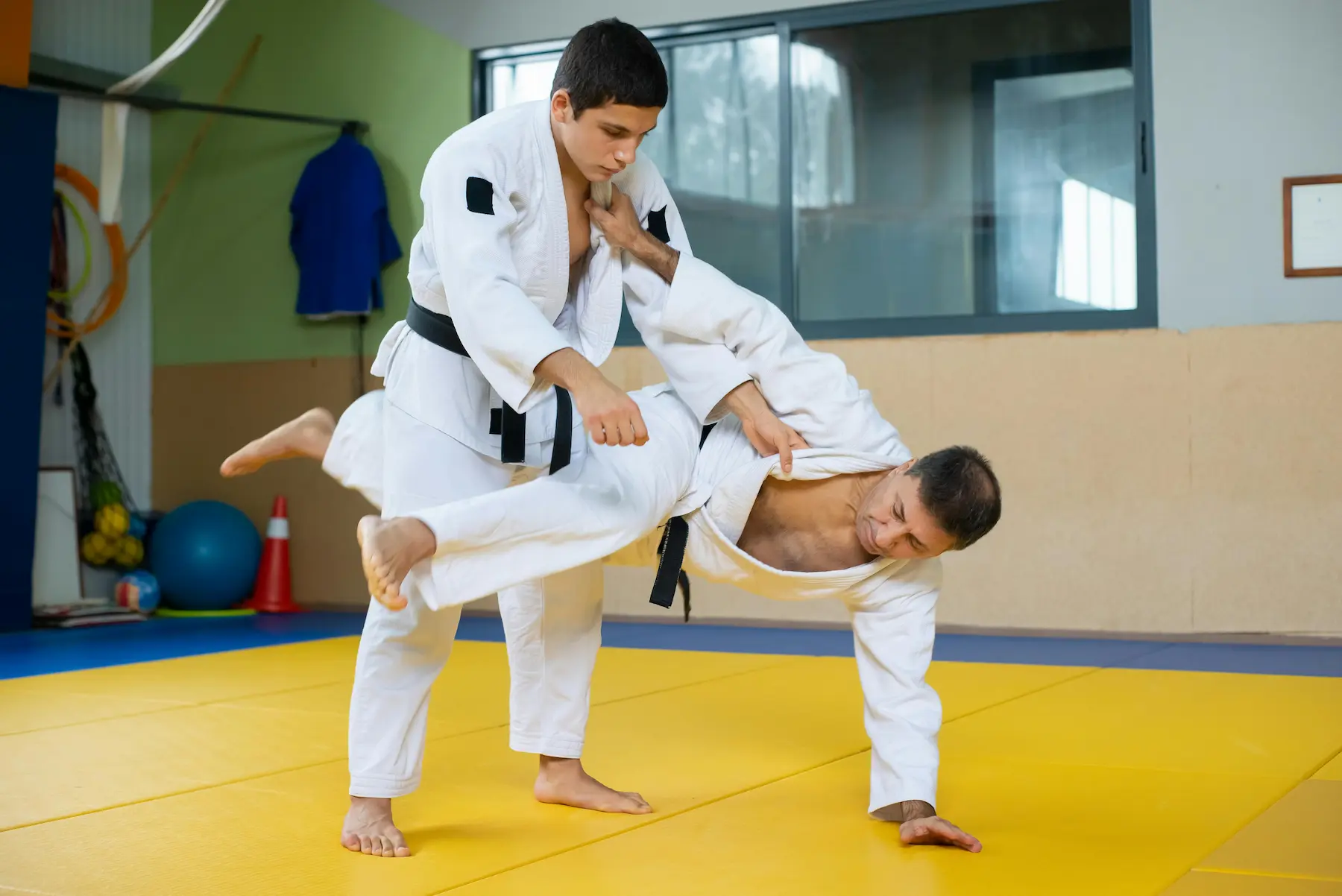
**Technique (Waza) – 30 Minutes:** You will partner up for static drills called Uchikomi, practicing the entry of a throw without actually completing it. You fit your body against your partner’s repeatedly. You might learn one basic throw like Osoto Gari (Major Outer Reap) or O Goshi (Hip Throw), likely practiced on a crash pad (thick foam mat) rather than the floor.
**Sparring (Randori) – 10 Minutes:** Here is where modern safety standards apply. Most reputable dojos will not let beginners spar on Day 1—this is actually a positive sign. You will likely sit and observe the colored belts. If they do invite you on the mat, you will be paired with a Black Belt whose job is to keep you safe. Do not resist; relax your arms and fall when swept.
Safety Regulations and What They Mean for Beginners
Current safety protocols from 2024–2026 increasingly restrict beginners from Randori (free sparring) until they demonstrate safe falling technique. This typically requires 4–8 weeks of foundational training first. The International Judo Federation (IJF) implemented rules in 2024–25 strictly banning techniques that land practitioners on their head or neck.
This “head dive” regulation means if you feel yourself going over during a throw, you should go over rather than fight it. Resisting gravity to avoid a throw risks concussion or spinal injury.
**Green Flags:** The instructor constantly corrects your breakfall technique and prevents aggressive sparring for new students.
**Red Flags:** Being asked to do full-contact sparring with another white belt on Day 1. This scenario is the leading cause of beginner injury. A reputable dojo prioritizes controlled learning over intensity.
Essential Terminology: Five Words You Need to Know
You do not need fluency in Japanese, but knowing these five terms will help you follow class without confusion: **Sensei:** Teacher. Address your instructor as Sensei, not “Coach” or their first name. **Hajime (Ha-ji-may):** Start or Go. When you hear this, begin the drill or match. **Matte (Ma-tay):** Stop or Wait. If you hear this command, freeze immediately. **Rei:** Bow. You will perform this at multiple points—entering the dojo, stepping on the mat, and during lineup. **Ukemi:** Breakfalls. This is your primary skill for the first month and the foundation of safe Judo practice.
Costs, Gear, and Practical Logistics for 2026
Monthly membership costs vary significantly by region. In the USA, expect average dues of $100–$160 per month. UK and European clubs often operate as non-profits, with rates ranging from £5–£10 per session or £30–£50 monthly. A starter Gi costs approximately $50–$70. Do not purchase a Karate or BJJ Gi—Judo Gis are constructed with thicker fabric to withstand constant grabbing during training. Bring a large water bottle and flip-flops to every class. Never walk barefoot off the mats (to the bathroom, for example) and then return to the Tatami. Walking off-mat contaminates your feet, and tracking that onto the training surface is the fastest way to receive a correction from your Sensei.
What Your First Class Will Actually Feel Like
Prepare to be physically humbled. Beginners commonly describe the sensation as “drowning on land”—the constant gripping and tugging spikes your heart rate in ways that differ from running or lifting. Expect soreness in your neck, fingers, and core over the following days. Judo engages muscles you rarely use. You will feel confused by footwork. This is normal and universal to the beginner experience. Despite the difficulty, most first-day accounts mention a distinct satisfaction from successfully completing a throw onto a crash pad. That moment—feeling the mechanics click—is what hooks people on the sport. You will fall far more than you throw in your first month, but each fall teaches your body how to move safely when the roles eventually reverse.
Example Scenario
Kevin, age 34, software developer with no martial arts background, attends his first Judo class at a local dojo charging $140/month. He arrives 15 minutes early wearing borrowed sweatpants and a long-sleeved shirt, signs the waiver, and learns to bow when entering the mat area. During the 90-minute session, he spends most of his time practicing Ukemi breakfalls from crouching positions, completing approximately 75 controlled falls while an instructor constantly corrects his chin-tuck technique. He partners with a blue belt for static Uchikomi drills on O Goshi hip throw entries but is not permitted to participate in the final Randori sparring session, instead observing from the sideline—a safety protocol he recognizes as a green flag indicating a reputable dojo.
Tables
Typical Judo Class Structure (2025 Dojo Standards)
| Segment | Duration | Key Activities | Beginner Notes |
|---|---|---|---|
| Warm-Up (Taiso) | 20 minutes | Jogging, shrimping, tumbling rolls | Designed to exhaust slightly to promote technique over strength |
| Breakfalls (Ukemi) | 30 minutes | Mat slapping, chin tucking, impact dissipation | Expect 50–100 practice falls from crouching position; #1 priority for first month |
| Technique (Waza) | 30 minutes | Uchikomi (static entry drills), basic throws on crash pads | Likely throws: Osoto Gari or O Goshi; partner drilling without full throws |
| Sparring (Randori) | 10 minutes | Free sparring (observation only for beginners) | 2024–2026 safety trend: 4–8 weeks of basics required before participation |
Judo Training Costs by Region (2025 Market Data)
| Region | Monthly Dues | Per-Session Rate | Starter Gi Cost |
|---|---|---|---|
| USA | $100–$160/month | Not typically offered | $50–$70 |
| UK/Europe | £30–£50/month | £5–£10 per session | $50–$70 equivalent |
| Notes | — | UK/Europe often cheaper due to non-profit club structures | Do not substitute Karate or BJJ Gi; Judo Gis are thicker for gripping |
Judo Safety Protocols & Red/Green Flags (2024–2026 Standards, per IJF Rules)
| Indicator Type | Description | Safety Rationale |
|---|---|---|
| Green Flag | Instructor constantly corrects breakfall technique | Ukemi mastery prevents injury during throws |
| Green Flag | Beginners restricted from Randori for 4–8 weeks | Ensures safe falling ability before contact sparring |
| Red Flag | Full-contact sparring with another white belt on Day 1 | #1 cause of beginner injury per practitioner reports |
| IJF Rule (2024/25) | Strict ban on landing on head/neck to avoid throws | Prevents concussion and spinal injury; ‘Head Dive Rule’ enforcement |
Frequently Asked Questions
What should I wear to my first Judo class?
Wear a Judo Gi if the club loans one (ask ahead), or bring a long-sleeved rash guard/t-shirt with loose sweatpants—no zippers or pockets. Trim all fingernails and toenails short before arriving, and remove all jewelry including rings and piercings. This prevents cutting your training partners during gripping.
Will I spar on my first day of Judo?
No, most reputable dojos in 2024-2026 will not let beginners spar on Day 1. You’ll typically need 4–8 weeks of basics, specifically learning Ukemi (breakfalls), before participating in Randori (free sparring). This is a safety green flag—if a gym lets you full-contact spar with another white belt on Day 1, consider it a red flag.
What will I actually learn in my first Judo class?
You’ll spend the majority of your first class learning Ukemi (breakfalls)—how to fall safely by tucking your chin and slapping the mat. Expect to do 50-100 practice falls. You may also learn one basic throw like Osoto Gari or O Goshi, typically practiced on a crash pad rather than the floor.
How much does Judo cost per month?
In the USA, average monthly dues range from $100–$160/month. In the UK and Europe, non-profit club structures make it cheaper at £5–£10 per session or £30–£50/month. A starter Judo Gi costs $50–$70—don’t buy a Karate or BJJ Gi, as Judo Gis are thicker to withstand constant grabbing.
What is Ukemi in Judo and why is it important?
Ukemi is the art of breakfalls—learning to fall safely by tucking your chin to protect your head and slapping the ground to dissipate impact. It’s the #1 priority for your first month because you cannot throw someone safely until you can be thrown safely. Modern safety standards require proficiency in Ukemi before you’re allowed to spar.
How long is a typical Judo class?
A typical Judo class runs about 90 minutes. It includes a 20-minute warm-up (jogging, shrimping, tumbling), 30 minutes of Ukemi practice, 30 minutes of technique drills, and 10 minutes of sparring observation for beginners. Judo warm-ups are notoriously intense and designed to exhaust you so you rely on technique rather than strength.
What Judo etiquette should beginners know?
Arrive 15–20 minutes early to sign waivers. Bow when entering the dojo and stepping onto the mat. Address your instructor as ‘Sensei,’ not ‘Coach.’ Line up by rank with beginners on the far left. Never walk barefoot off the mats to the bathroom and back on—this is a fast way to get corrected by the Sensei.